Choosing new software should be straightforward. In reality, it rarely is.
Too many options.
Too many opinions.
And too much focus on the product… rather than what the business actually needs.
Over time, we’ve found the best decisions come from simplifying the process.
Not adding more to it.
Here’s a practical way to approach it.
1. Be clear who is making the decision
Before anything else — decide who’s actually involved.
Not everyone needs to be in every conversation.
You need the right people:
- The people who feel the pain day to day
- The people who will actually use the system
- The person accountable for the final decision
Where it often slows down is when too many voices are involved… without clarity on who decides.
You get input.
But no ownership.
Clarity here speeds everything else up.
2. Start with your own audit — not a demo
Before you look at any software, look internally.
Where are the pain points?
What’s slowing you down?
Where are errors creeping in?
What’s frustrating your team day to day?
Be honest about it.
Most businesses already know where things aren’t working — they just haven’t written it down.
That audit becomes your anchor.
Without it, it’s very easy to get distracted by features that look good… but don’t actually solve your problems.
3. Define your Essentials vs your Nice-to-Haves
Not all requirements are equal.
Split them into two clear categories:
Essentials
The things the software must do.
The problems it must solve.
Nice-to-haves
Features that would be helpful, but aren’t critical.
This is where a lot of decisions go wrong.
People expect software to do everything — and hold out for the “perfect” solution.
It rarely exists.
Good decisions come from knowing what really matters… and being comfortable compromising on the rest.
4. Be realistic about “fit”
You are buying off-the-shelf software.
Not something built specifically for your business.
That means it won’t match your processes perfectly — and that’s okay.
The question isn’t:
“Does this fit us exactly?”
It’s:
“Does this improve how we operate overall?”
In most cases, the right software will handle the majority of your workflow — and there may be a few things you still do outside of it.
That’s normal.
Trying to force a perfect fit often leads to overcomplication or no decision at all.
5. Look beyond the product — look at the company
The software matters.
But so does the business behind it.
Ask yourself:
Are they UK-based and understand your market?
Do they work with companies like yours already?
How do they support clients day to day?
What does onboarding look like?
You’re not just buying a tool.
You’re entering into a working relationship.
The level of support, understanding and responsiveness will have a huge impact on whether the software is successful in your business.
6. Make a decision based on what matters
Once you’ve:
- Audited your needs
- Defined your essentials
- Understood the trade-offs
You probably have enough information.
At that point, it’s about making a call.
Not endlessly reviewing.
No software decision is completely risk-free.
But staying where you are isn’t risk-free either.
Final thought
The best software decisions aren’t made by finding something perfect.
They’re made by being clear on your needs… and choosing something that meaningfully improves them.
Simple as that.
We have these conversations a lot with specialist contractors.
Often before they even see Chalkstring.
Helping them get clear on what they actually need — and whether we’re the right fit.
Because if the fundamentals aren’t right, the software won’t fix it.
But when they are, that’s when you start to see real change.
Faster estimating.
Better visibility.
Stronger control over margin.
And ultimately, a business that feels easier to run.


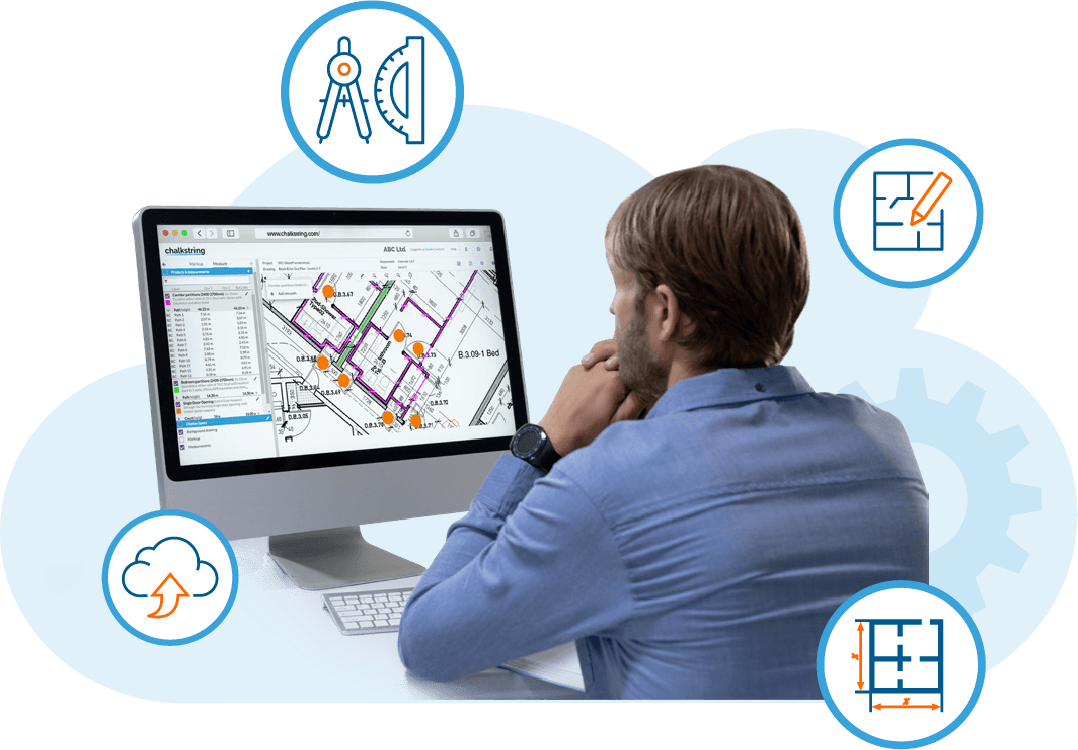 Digital take-off software for measuring and managing quantities from drawings.
 Software for managing all commercial activity on live projects in real time.
  One system for take-off, estimating and managing live project commercials.